Company
Markets
OZ Labs
Product
  • News
  • LOG IN
  • GET STARTED

Make the real world queryable. OZ is the missing layer of physical AI: a live model of every real place, built inside it.

Talk to us

Product

  • OZ VI Venue
  • OZ Astro
  • Managed Services
  • World Models

Markets

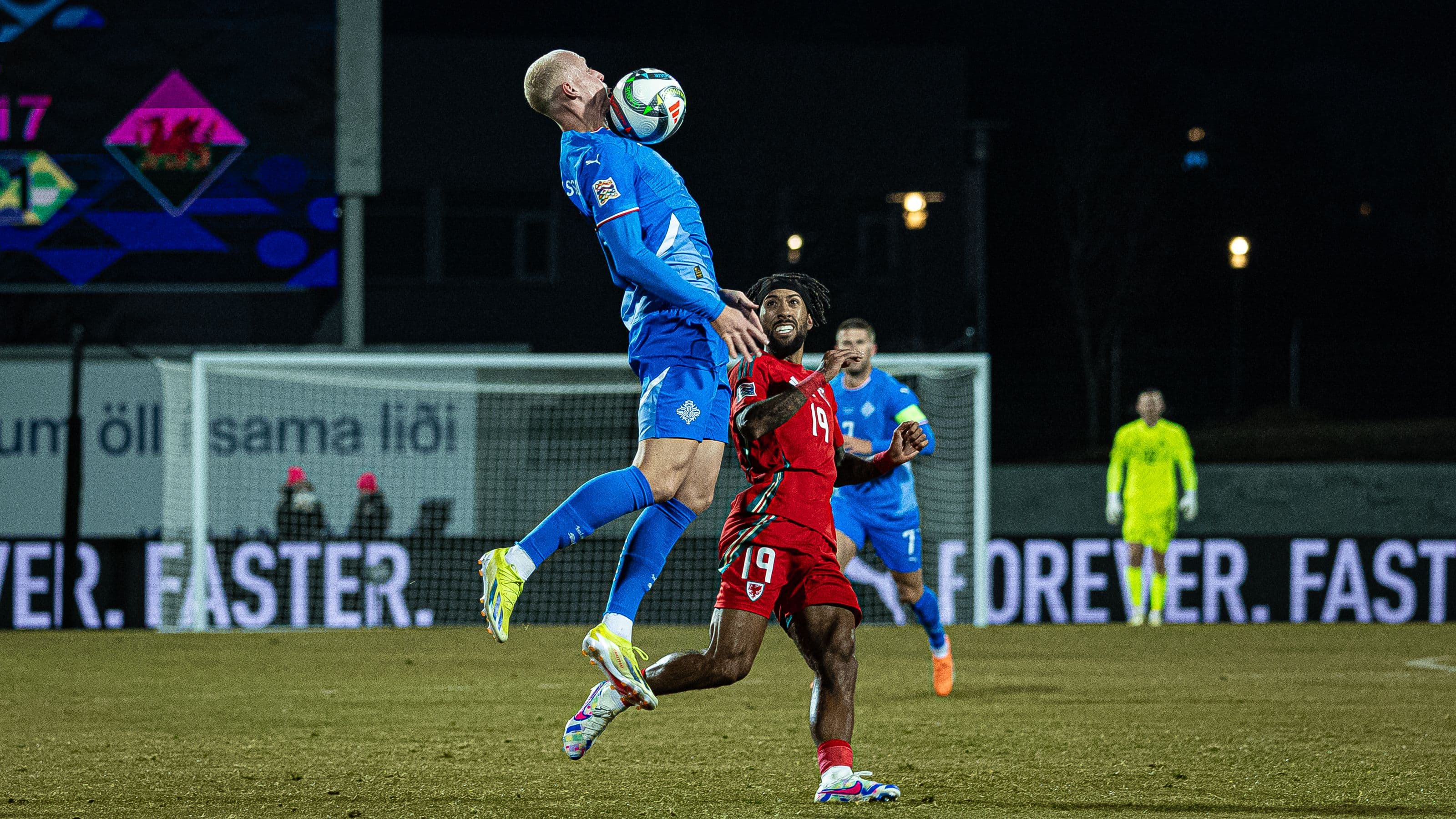
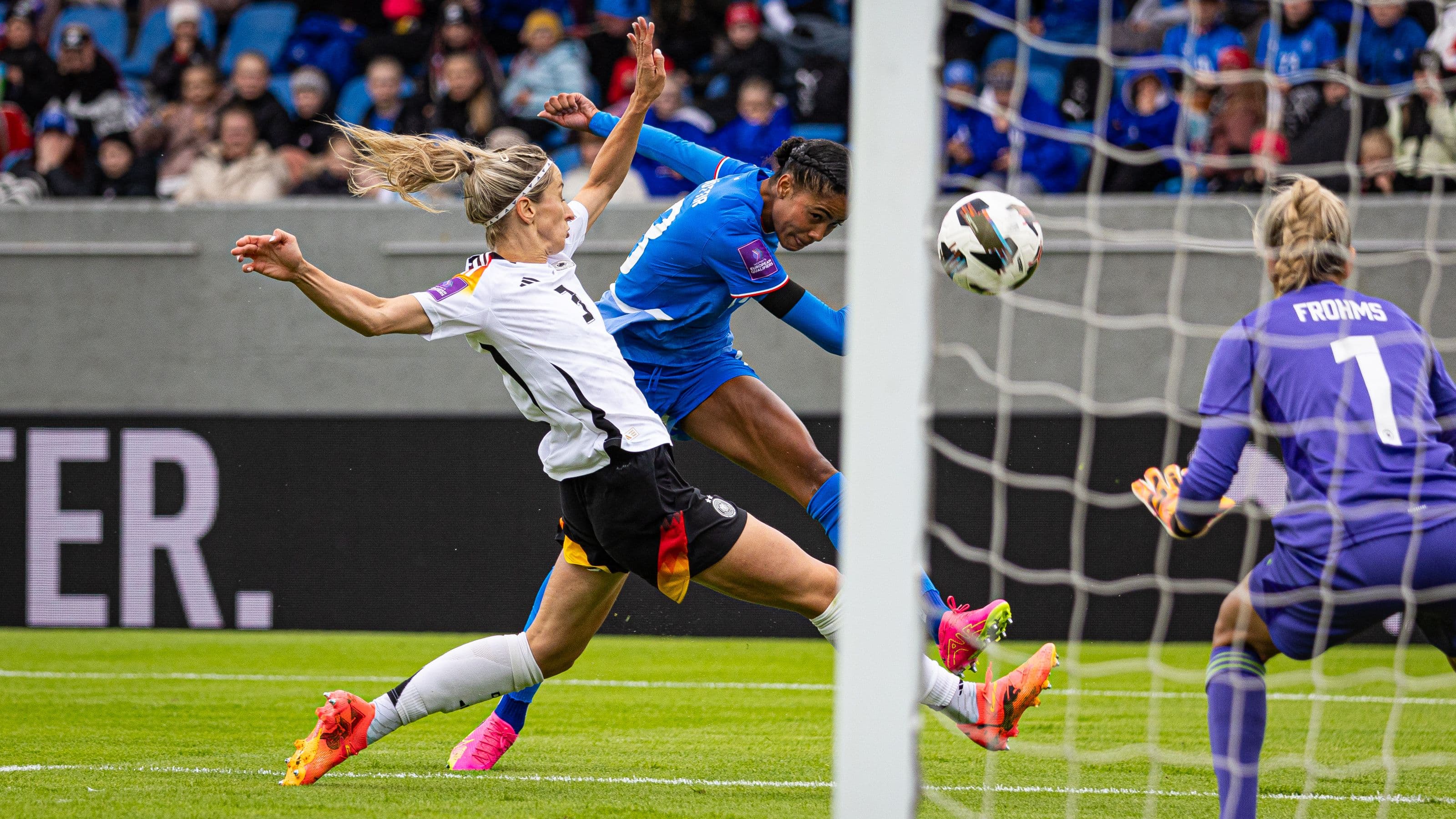
  • Sports
  • Broadcasting
  • Robotics

OZ Labs

  • OZ Labs
  • ArcFlow

Company

  • About
  • Technology
  • Careers
  • Contact

Ready to see it live?

Talk to the OZ team about deploying at your venues, from a single pilot match to a full regional rollout.

Schedule a deployment review

© 2026 OZ. All rights reserved.

LinkedIn

OZ turns physical environments
into repeatable operations

From pilot to production cluster, we standardize deployment, runtime, and operations so each new venue inherits proven control logic, not re-invention.

Schedule a deployment review

Our mission

Physical environments are still launched like one-off projects: custom, manual, and hard to scale. OZ starts at the opposite point: build once, scale with confidence.

The result is simple: faster rollouts, lower variance, and operations you can trust beyond the first venue.

Physical AI — robots, autonomous systems, multi-agent deployments — needs two layers: neural intelligence that predicts, and an operational layer that stores what actually happened. ArcFlow is that second layer: the operational world model beneath the neural tier. OZ Managed Services is that layer running at live venues, under broadcast SLOs, every match day.

Vision & Platform

Gudjon Gudjonsson

Founder and CEO

Platform strategy, product direction, and the operating thesis behind managed venue infrastructure. Built OZ from first prototype to multi-venue deployment network. Owns the full value chain from edge sensing to ArcFlow-powered data distribution.

Gudjon Gudjonsson

Interview Series | Gudjon

View all

What If a Database Could Predict Where Every Player Will Be?

What if a database could answer: 'If the defensive line holds for three more seconds, which attackers reach scoring position?' That query (prediction conditioned on a hypothetical action, evaluated in real time) is what Arcflow is really building toward. The venue was the first proof. It was never the final scope.

March 1, 2026

We Stopped Writing Code and Started Directing Intelligence

During a live match, the Action Manager makes hundreds of decisions per minute while a director sets intent. Gudjon Gudjonsson realized OZ's engineers were doing the same thing with code, and rebuilt the entire development process around it.

February 25, 2026

Why We Had to Build a Spatial Engine from Scratch

Powerful GPUs sat idle at every venue while spatial queries crawled on the CPU. After years of accumulated problem statements, Gudjon Gudjonsson stopped patching workarounds and architected Arcflow, a spatial graph engine borrowed from the physics of 3D game engines.

February 22, 2026

12 Milliseconds vs 0.4: Why Spatial Computing Needs Its Own Engine

Every major database claims spatial support. Gudjon Gudjonsson cites the benchmark: 12 milliseconds on a traditional processor, 0.4 milliseconds on Arcflow's GPU. That 30x gap is the difference between keeping up with live action and falling behind, and the reason OZ built its own engine from scratch.

January 25, 2026

Why the Real Moat in AI Is Integration, Not Any Single Layer

"If you cut any one connection, the whole system degrades. That is not a design flaw. That is the design." Gudjon Gudjonsson on why OZ's real moat is not any single layer; it is the conversation between all five.

January 4, 2026

The Gap Between an AI Demo and AI Infrastructure

A model update passed every benchmark and failed in production. The culprit: 15 milliseconds of lag triggered by LED floodlight reflections that never appeared in the lab. That failure changed everything about how Gudjon Gudjonsson thinks about OZ Cortex.

November 2, 2025

What If the Physical World Remembered Everything?

A football match produces ninety minutes of the most spatially complex motion in any commercial context, and when the whistle blows, the venue forgets everything. OZ exists to give the physical world a memory.

October 22, 2025

The Missing Schema for the Physical World

A football pitch is 105 meters of grass. Twenty-two players generate thousands of spatial events every ninety minutes. Historically, none of it was captured in a way software could understand. Gudjon Gudjonsson on the engine that gave the physical world a schema.

September 21, 2025

The Stadium That Forgot Everything After Every Match

Fourteen people, two trucks, two hundred kilos of cable, all for ninety minutes of play. Standing on a stadium gantry in Reykjavik, Gudjon Gudjonsson saw the gap that became OZ: the physical world had no memory.

August 12, 2025

Why This Exists

Venues are still started like one-off projects

Great first install, high variance, fragile handoffs, unreliable scale.

Most operators inherit variance: each venue starts as a new migration. Setup is manual, signal chains are fragmented, and operational knowledge does not transfer between sites. As demand for live physical intelligence grows, this model breaks. Quality drops, rollout slows, and operations risk rises with every new venue.

How we make it repeatable

Sensing, planning, runtime, control, and APIs treated as one stack. OZ deploys managed OZ VI Venues: one venue, one system. The operating language, acceptance criteria, and data contracts remain consistent across teams, shifts, and sites.

Launch once is a project. Scale many is infrastructure. Our products are the layers that make that model real.

Strategy & Governance

Baldur Stefansson

Executive Chairman

Capital structure, board governance, and strategic partnerships. Architects the commercial framework that turns venue-level economics into a scalable infrastructure business. Ensures every deployment decision passes the repeatable operations test.

Baldur Stefansson

Interview Series | Baldur

View all

Why OZ Grows Through Partners, Not Just Sales Teams

A small, focused team with OZ's platform behind them can build a production infrastructure business that competes with companies ten times their size. Baldur Stefansson on why OZ grows through local partners, not sales offices.

March 15, 2026

What Happens When Every Match Can Be Produced

Permanent venue infrastructure changes what's possible across the football pyramid. Better quality, lower cost per match, and a production model that works for leagues and competitions that couldn't justify a traditional crew call. Baldur Stefansson on the opportunity OZ VI opens up.

February 4, 2026

Does Your Hundredth Deployment Cost More or Less Than Your Tenth?

Most AI companies die from the same disease: their costs scale as fast as their revenue. Baldur Stefansson draws the two-line chart that separates real infrastructure from linear replication dressed in growth language.

November 12, 2025

"I Did Not See an AI Company. I Saw a Telecoms Company."

"When I looked at OZ, I did not see an AI company. I saw a telecoms company." Infrastructure investor Baldur Stefansson on why thirteen football pitches in Iceland looked like the compounding economics of submarine cable.

May 15, 2023

Sense, design, run, operate, scale, query: one integrated stack

RUN: OZ VI Venue

Same runtime, every venue.

DESIGN: OZ Designer

Deployment certainty before install.

OPERATE: VI Venue Director

Live operation discipline.

CAPTURE: OZ Astro

Baseline sensing consistency.

REMEMBER: ArcFlow

Neural models predict. ArcFlow remembers.

QUERY: ArcFlow Engine

The persistence primitive, available to everyone.

Architecture

Latency is the product

All time-critical decisions run on-venue. Cloud handles everything that can wait.

Perception, cueing, control, and spatial output run at the venue edge with zero cloud dependency. p99 ≤120 ms is our inference target. Model training, fleet analytics, playbook optimization, and reporting run in the cloud. A network outage does not interrupt the spatial layer. The venue keeps operating.

Perception & Computer Vision

Dr. Bhagyashree Lad

Head of AI Vision

Edge-native vision models, multi-camera fusion, and real-time detection. Leads the perception stack that runs at the venue edge, from wide-scene spatial tracking to entity identification across optical zoom ranges. Every model ships to production, not papers.

Dr. Bhagyashree Lad

Interview Series | Dr.

View all

One JSON File Runs Six Cameras for Ninety Minutes

One JSON file orchestrates six broadcast cameras through ninety minutes of live football, with no code, no compilation, no engineer in the loop. Dr. Bhagyashree Lad walks through the document that turned opaque camera logic into something a producer can read and a machine can execute.

March 22, 2026

What Breaks When Computer Vision Meets a Live Stadium

Academic benchmarks test AI models on clean clips under controlled lighting. Live production tests them against rain, smoke, shifting floodlights, and players moving at full sprint for ninety continuous minutes. The gap between the two is where most perception systems fail.

December 3, 2025

What Happens When a Vision Model Meets Physics

Production perception isn't a harder version of research; it's a different discipline entirely. Rain, sealed hardware, ninety continuous minutes, and no cloud fallback rewrite every assumption a benchmark-trained model relies on.

August 22, 2025

Enclosure & Edge Systems

Dr. Rushikesh Deshmukh

Head of Enclosure & Edge Systems

Enclosure product line, robotics integration, electronics, and Astro edge device systems. Owns the physical platform that every venue deployment runs on, from enclosure design and environmental hardening to board-level electronics and device commissioning. 18+ years in embedded systems, mobile robotics, and hardware product development with 7 patents.

Rushikesh Deshmukh

Interview Series | Dr.

View all

It Fits in One Hand and Tracks Every Player for $500

It fits in one hand, costs about five hundred dollars, and tracks every player on a football pitch sixty times per second with zero cloud dependency. Dr. Rushikesh Deshmukh introduces the OZ Astro and explains why it isn't a camera.

March 22, 2026

The Prototype That Passed Every Lab Test and Failed at the Coast

A prototype passed every lab test: thermal cycling, waterproofing, UV, vibration. Six weeks at a coastal venue, and salt air found a path no simulation had predicted. Dr. Rushikesh Deshmukh on the failure modes that only real seasons reveal.

December 24, 2025

Why the Hardest Problem in AI Is the Box, Not the Model

They melted three prototypes before the thermal architecture worked. Dr. Rushikesh Deshmukh on why OZ builds its own sealed, fanless edge hardware, and why the scar tissue from five seasons outdoors is a moat no competitor can buy.

September 1, 2025

How we think and operate

Venue Ops as Code

Repeatable operations.

Install, commission, runtime, and incident response encoded as playbooks and policies.

Management as Code

Executable governance.

SLOs, override policies, escalation rules, and audit trails, all versioned, executable, and drift-resistant.

From Pilot to Fleet

Compounding deployment.

Pilot learning compounds into deployment leverage. Each new venue gets faster.

Ops Economics of AI

Structural advantage.

AI does not just automate work; it changes the operating model's unit economics.

AI Runtime & Cortex

Gudjon Gudjonsson

Founder and CEO

OZ Cortex runtime, model serving, and the AI inference stack that runs at the venue edge. The execution layer between perception output and control decisions: model optimization, pipeline orchestration, and deterministic inference under real-time constraints. Currently held by the founder while the domain is rescoped.

Gudjon Gudjonsson

Interview Series | Gudjon

View all

What If a Database Could Predict Where Every Player Will Be?

What if a database could answer: 'If the defensive line holds for three more seconds, which attackers reach scoring position?' That query (prediction conditioned on a hypothetical action, evaluated in real time) is what Arcflow is really building toward. The venue was the first proof. It was never the final scope.

March 1, 2026

We Stopped Writing Code and Started Directing Intelligence

During a live match, the Action Manager makes hundreds of decisions per minute while a director sets intent. Gudjon Gudjonsson realized OZ's engineers were doing the same thing with code, and rebuilt the entire development process around it.

February 25, 2026

Why We Had to Build a Spatial Engine from Scratch

Powerful GPUs sat idle at every venue while spatial queries crawled on the CPU. After years of accumulated problem statements, Gudjon Gudjonsson stopped patching workarounds and architected Arcflow, a spatial graph engine borrowed from the physics of 3D game engines.

February 22, 2026

12 Milliseconds vs 0.4: Why Spatial Computing Needs Its Own Engine

Every major database claims spatial support. Gudjon Gudjonsson cites the benchmark: 12 milliseconds on a traditional processor, 0.4 milliseconds on Arcflow's GPU. That 30x gap is the difference between keeping up with live action and falling behind, and the reason OZ built its own engine from scratch.

January 25, 2026

Why the Real Moat in AI Is Integration, Not Any Single Layer

"If you cut any one connection, the whole system degrades. That is not a design flaw. That is the design." Gudjon Gudjonsson on why OZ's real moat is not any single layer; it is the conversation between all five.

January 4, 2026

The Gap Between an AI Demo and AI Infrastructure

A model update passed every benchmark and failed in production. The culprit: 15 milliseconds of lag triggered by LED floodlight reflections that never appeared in the lab. That failure changed everything about how Gudjon Gudjonsson thinks about OZ Cortex.

November 2, 2025

What If the Physical World Remembered Everything?

A football match produces ninety minutes of the most spatially complex motion in any commercial context, and when the whistle blows, the venue forgets everything. OZ exists to give the physical world a memory.

October 22, 2025

The Missing Schema for the Physical World

A football pitch is 105 meters of grass. Twenty-two players generate thousands of spatial events every ninety minutes. Historically, none of it was captured in a way software could understand. Gudjon Gudjonsson on the engine that gave the physical world a schema.

September 21, 2025

The Stadium That Forgot Everything After Every Match

Fourteen people, two trucks, two hundred kilos of cable, all for ninety minutes of play. Standing on a stadium gantry in Reykjavik, Gudjon Gudjonsson saw the gap that became OZ: the physical world had no memory.

August 12, 2025

From pilot to rollout

Every deployment follows a standardized commissioning window: site survey, design lock, hardware install, calibration, acceptance test, and go-live. Post-launch governance includes override policies and SLO tracking from day one. The playbook transfers between sites. Deployment variance drops with each new venue, not with more staff.

Operating Model

We own the closed loop

Capture, compute, control, output, all executed at the venue edge.

OZ is not a thin software layer. We deploy and operate managed infrastructure that runs the full venue control loop: sensors capture the scene, edge compute processes in real time, AI directs robotic cameras, and ArcFlow delivers structured output as queryable fragments. Every step runs on-venue. The system executes the work; humans supervise exceptions.

Operations & Scale

Audur Erlingsdottir

Chief Operating Officer

Deployment operations, managed services, and venue rollout. Owns the commissioning playbook (from site survey to go-live) and the post-launch SLO governance that makes each venue operationally accountable from day one.

Audur Erlingsdottir

Interview Series | Audur

View all

What It Actually Takes to Make a Stadium Intelligent

Six small enclosures on a gantry, a cabinet in a service room, fibre in the cable trays. A visitor would not notice anything different. But after five days of installation, the stadium sees, understands, and remembers every match it hosts.

March 12, 2026

The Survival of the Adopters

What used to require multiple departments and large teams now fits in one role. Not through longer hours, but because AI eliminated the routine work that justified departments in the first place.

February 12, 2026

The Playbook That Blocks Bad Deployments Before They Ship

A tiny team runs what traditionally takes a department. The secret isn't heroic effort; it's a commissioning playbook that absorbs every deployment's lessons and blocks the next one from repeating any mistake.

October 12, 2025

People & Talent Growth

Chandni Desai

Head of People Operations

Owns the human side of scaling: talent acquisition, team development, and organizational health. As the team grows with the deployment footprint, she ensures the right people join, develop, and stay. HR operations, compliance, and culture across the organization.

Chandni Desai

Interview Series | Chandni

View all

The Hiring Signal That Matters Most in AI-Native Teams

A new hire used an AI agent to audit an entire subsystem in their first week (hundreds of files, thousands of lines) then identified the three issues that actually mattered. That is exactly the kind of person Chandni Desai is looking for.

March 8, 2026

Why Clarity Matters More Than Any Technical Credential

Two candidates interview in the same week. Both have strong resumes. Both can talk distributed systems. One gets an offer. The difference isn't technical skill; it's the one quality Chandni Desai tests for before anything else.

December 14, 2025

Why OZ Hires for Leverage, Not Headcount

An engineer turned down a major cloud provider to join a company with no career ladder. His reasoning reveals why OZ hires for leverage, not headcount, and how that principle lets a tiny team produce outsized output.

October 1, 2025

Scaling the team with the fleet

Every new venue deployment increases operational leverage, not headcount. AI handles the per-match workload. Humans handle what AI cannot: judgment, relationships, culture, and domain expertise. The organizational model scales the same way the platform does: more output per person, not more people per output.

Platform Onboarding

Sunil Kashyap

Head of OZ Studio Tech Stack

Partner onboarding across VI Venue Director, OZ Designer, and ArcFlow. Guides operators and integration partners from first login to production workflows, ensuring every team inherits platform fluency, not just credentials.

Sunil Kashyap

Interview Series | Sunil

View all

What Match Day Looks Like with One Person and a Browser

No broadcast truck. No camera operators. No cable runners. Two hours before kickoff at a Nordic venue, the entire production crew is one director opening a browser tab 200 kilometers away. This is what match day looks like when AI handles the mechanical decisions and the human handles the story.

February 15, 2026

Twelve Venues, Four Months: Why Deployment Starts in Software

Twelve venues, four months, one season. The traditional approach (send an engineer to each site, carry the configuration home in their head) doesn't survive contact with the calendar. The deployment starts somewhere no one expects: on a laptop, in simulation, weeks before anyone visits the first stadium.

January 14, 2026

From First Login to Live Match: The OZ Platform

A production director asks the only question that matters: 'Just show me what I'm getting.' Sunil Kashyap answers with a complete walkthrough, from planning a venue to producing a live match to pulling data after the final whistle.

November 23, 2025

Most Enterprise Platforms Die at Hour 50

Most enterprise platforms die at hour 50, buried under configuration screens and optimistic documentation. Sunil Kashyap engineers the opposite: a first login where you see live spatial data in two minutes and forget you're using a platform within three weeks.

September 11, 2025

Every venue makes the whole system smarter

Atoms, not just bits

Full-stack edge: enclosure to API, vertically integrated.

Every deployed OZ VI Venue is sealed hardware at the venue: enclosures, robotic gimbals, GPU compute, fiber. Physical infrastructure cannot be replicated with software tools, AI, or capital alone. It requires permits, installation, venue relationships, and time.

Compounding Ground Truth

The deployment flywheel: each venue makes the whole system smarter.

Every match, shift, and season adds sensor-measured ground truth, playbook refinements, and operational learning to the ArcFlow graph. Neural world models improve by comparing predictions to what actually happened — that delta lives in ArcFlow. Competitors starting today have zero observed data and must operate for years to accumulate the equivalent.

Infrastructure-level trust

Embedded in venue operations, not bolted on.

Published SLOs, P1/P2 failure classifications and 24/7 NOC monitoring.

Operational scar tissue

Years of live operations cannot be compressed.

Commissioning procedures, recovery patterns, calibration routines, and edge-case handling refined across hundreds of live matches under broadcast SLOs. This institutional knowledge is encoded in playbooks and code, earned through live production where failure has consequences, not replicated through backtesting.

Trust by design

Edge-sovereign data

No raw data leaves the venue.

All venue data processed on-premise. Raw data stays at the venue. Only structured spatial output reaches the cloud.

Signed runtime

Runtime integrity enforced.

Every software update signed and verified. The edge runtime attests integrity on boot.

Override governance

Control is explicit and auditable.

Every human override logged with identity, timestamp, reason, scope. Auto-revert on timeout.

Data covenant

Clear ownership, no ambiguity.

Venue operators own raw data. OZ derives spatial intelligence under purpose-limited contracts.

Evidence

Proven where variance tolerance is zero

We started where the physics is hardest. The same platform works everywhere a camera needs to understand what it sees.

Live sports production demands more from spatial infrastructure than any other civil application: sub-second latency, unpredictable motion, zero tolerance for downtime. OZ VI Venues operate under these conditions every match day. The same platform expands concentrically — from sports to broadcasting, then to physical AI deployments: warehouse robotics, autonomous vehicles, drone fleets, and industrial IoT. Each ring uses the same nodes, the same ArcFlow operational world model, and the same playbook architecture. New playbooks, not new products.

See sports deployment

Why now

Five forces converged in the last 18 months that made Physical-AI infrastructure viable and urgent.

Edge GPU compute

Hardware generation leap

The GPU that makes venue-scale inference possible shipped 18 months ago.

OZ's custom ultra-low latency CV models require 166 TFLOPS FP32 with 48 GB VRAM to process six 4K60p streams in real time. The Ada Lovelace GPU generation, available only since late 2023, is the first with enough compute density and thermal efficiency for this workload in a venue-grade power envelope. Two years ago this hardware did not exist.

Model efficiency

Model efficiency revolution

Custom edge models that were research projects in 2024 are production systems today.

FP8 quantization reached production quality in 2024. Models that required FP32 precision two years ago now run at equivalent accuracy in FP8, cutting compute requirements 2-4x. Knowledge distillation techniques matured in parallel, enabling custom models that fit within venue power and thermal budgets.

Match coverage demand

Every match produced demand

Leagues need every match covered. Crew-based production cannot scale.

Sky Sports committed to 1,000+ EFL matches per season. Premier League coverage expanded to 215+ exclusive matches. Traditional OB trucks cannot scale to this volume. The demand for permanent automated production infrastructure is structural, not optional.

Regulatory compliance

Regulatory tailwind for edge sovereignty

Data sovereignty mandates favor on-venue processing.

EU AI Act, DORA, and NIS2 create mandatory edge processing and data residency requirements. Cloud-dependent AI systems face compliance risks in EU markets. Edge-sovereign architecture is becoming a regulatory requirement, not just a technical choice.

Defense procurement

Defense procurement opened

The procurement barrier for commercial-first AI has been removed by legislation.

The Pentagon's 2026 AI Strategy prioritizes commercial technology adoption. FY2025 and FY2026 NDAA expanded commercial product preferences for defense procurement. Dual-use companies can now sell to defense without becoming defense contractors.

Team

Flat. Extreme ownership. AI-native.

Core team scaling with the rollout profile. AI in the product drives venue outputs. AI in operations drives margin expansion. Autonomous capability areas with AI amplification across the operating model.

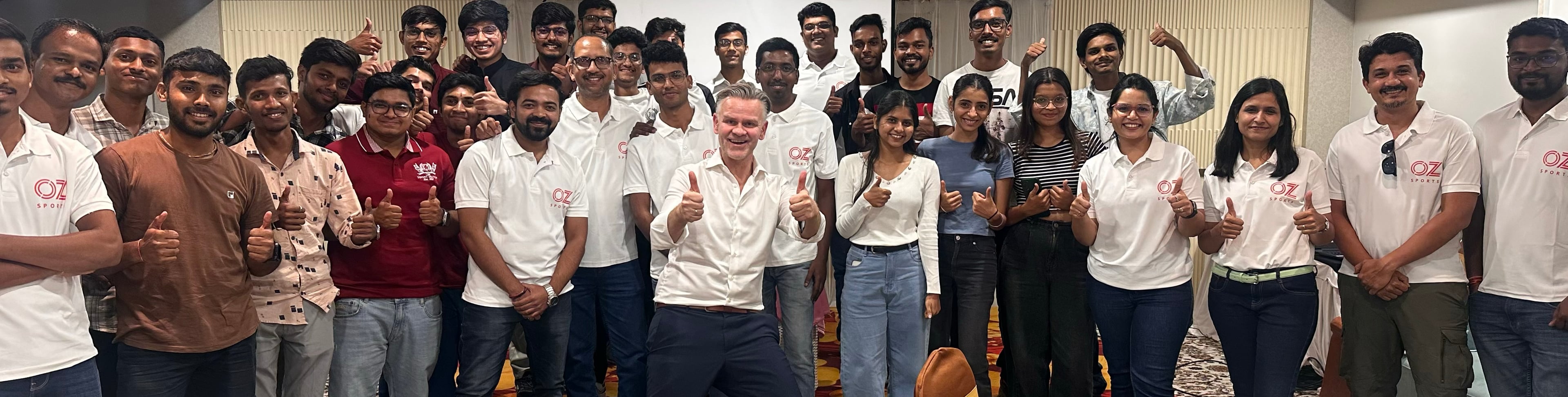
The OZ team
“We don’t build for demo day. We build for every match day, every shift, every season. That is the difference between a project and infrastructure.”

Gudjon Gudjonsson, Founder and CEO

Two layers, one company. ArcFlow: the operational world model — ground truth, persistence, and queryable history for physical AI. OZ Managed Services: the deployed edge infrastructure...

Schedule a deployment review