Make the real world queryable
Ask the internet a question and something answers. What did a share price do at 10:42? Which flights leave tonight? Software made the digital world queryable a long time ago.
Now stand in a stadium during a match and ask where every player is right now, and how fast each one is moving. Nothing answers. There are cameras on every wall. They record. They don't understand.
That gap is the missing layer of physical AI. Robots, drones, cars and cameras get better every year, and so do the models that drive them. What they don't have is a live model of the place they're in, one that software can ask what's happening while it's still happening.
That's the job we took on at OZ: make the real world queryable.
The internet has an index. A real place doesn't.#
AI has read the internet. Most of what people ever wrote down is text a model can search, quote and reason over. That's why a chatbot can plan your trip.
A real place has nothing like that. A stadium on match day is packed with information: 22 players, a ball and the officials, all moving at once. Every bit of it is visible. None of it is written down where software can read it.
The video goes to a file. The file waits for a person to watch it.
So the AI agent that can book you a flight can't ask the physical world what's happening. Online it has an index to work from; in a real place, it's blind. A world model is how it would see that place, and what it would be allowed to act on.
Imagined worlds, and a live one#
World models are one of the busiest ideas in AI right now, and the best of them are very good. Most of them generate a world: a plausible street, a room, a game level, made on request. They imagine.
A robot in a real place needs something else. It needs this place, as it is, built from the place's own sensors and updated many times a second. Most world models imagine a world. OZ keeps a live one.
Queryable is the test. Ask the model where everything is right now. If the answer is something software can act on, the place has a world model. If the answer is a video file, it doesn't.
Why it has to run inside the place#
A language model can take seconds to answer. Online, nobody minds. In a real place, a camera, a crane or a robot has to act in a fraction of a second, because the world won't wait for it.
Two clocks work against that. The first is physics: lenses are heavy, and motors take time to turn them. The second is inference, the time a model needs to understand what it sees.
Large general models are too slow for a live match, and sending the video to the cloud adds a round trip on top. By the time they answer, the play has moved.
We built our own chain of small, fast models instead. Each of them answers in tens of milliseconds, and they all run inside the venue. OZ analyses the play and acts on it while it's still happening.
Proved on a football pitch#
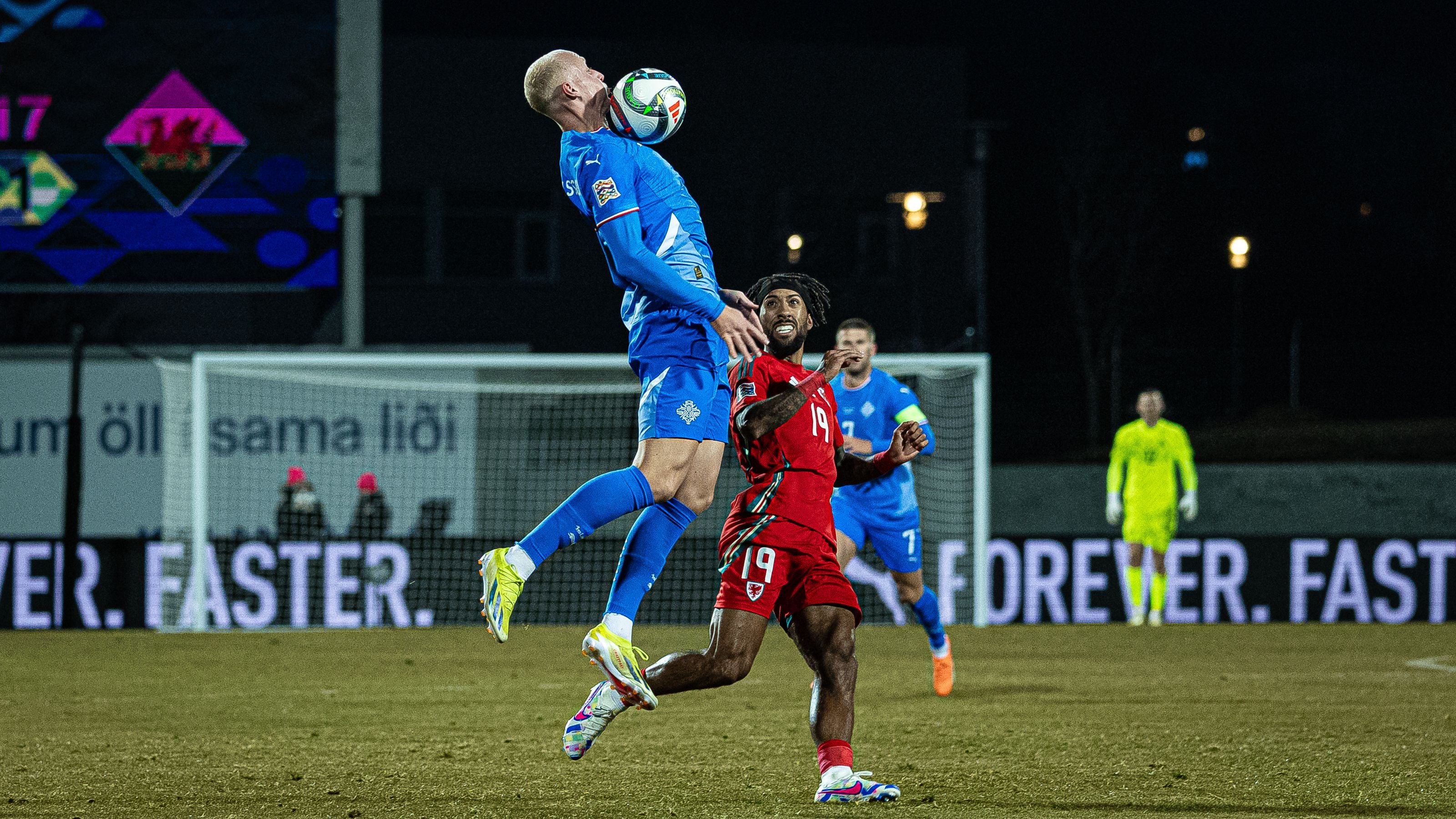
We picked a hard place to prove it: live football. Same pitch, 22 players, one ball, known rules, fast movement, every match. It's the perfect lab for a world model.
We run the whole stack, from detection to decision. The way into a venue is OZ Astro, our edge data sensor. OZ VI Venue adds robotic optical cameras and the compute that runs them, on site. ArcFlow, the world model engine, runs the models we train ourselves, and every decision follows a playbook.
What comes out is a live model of the match. Every player is found, with position and speed, as the game goes on. Our software in the venue can ask it for the state of the match at any moment, or follow every change as it happens.
The first thing we built on top was live production, because it solves a real and expensive problem. Close-ups carry the feeling of a match, and a close-up means knowing where to look. With a live model of the pitch, the cameras know. They stay on the play, with optical zoom, not digital.
It's installed once, like the stadium lights, and it's live for every match after that. Through Managed Services we run every venue, so the venue gets the output and not another system to look after.
Simulation first, then the real world#
Most of our testing happens before a match ever starts. Our simulator renders matches with exact ground truth, so every model is tested there before it reaches a real venue. Then the real venues show us where the simulation is wrong, and we fix it.
That loop is how OZ gets better. OZ Designer plans each venue's cameras before any hardware ships, so a new venue starts as a known scene.
A new playbook for each new place#
Sport is where the world model proves itself first. It isn't where it stops.
What the system does is set by its playbook: the rules of what to look for and what to do, written as data, not code. Football's playbook runs live today. Other places are where it goes.
Take a port. The stack stays the same. What changes is the playbook, and what the models look for: loads and cranes, not players and a ball.
A new kind of place needs a new playbook, not a new product. That's how one stack can reach many real places where things move.
The missing layer#
Physical AI has the models, and it has the machines. What it's missing is the layer between them and the world: a live model of each place, open to the software that has to act there.
The digital world became queryable, and a generation of software was built on top of it. The real world is next. We're making it queryable one place at a time, starting with a football pitch.